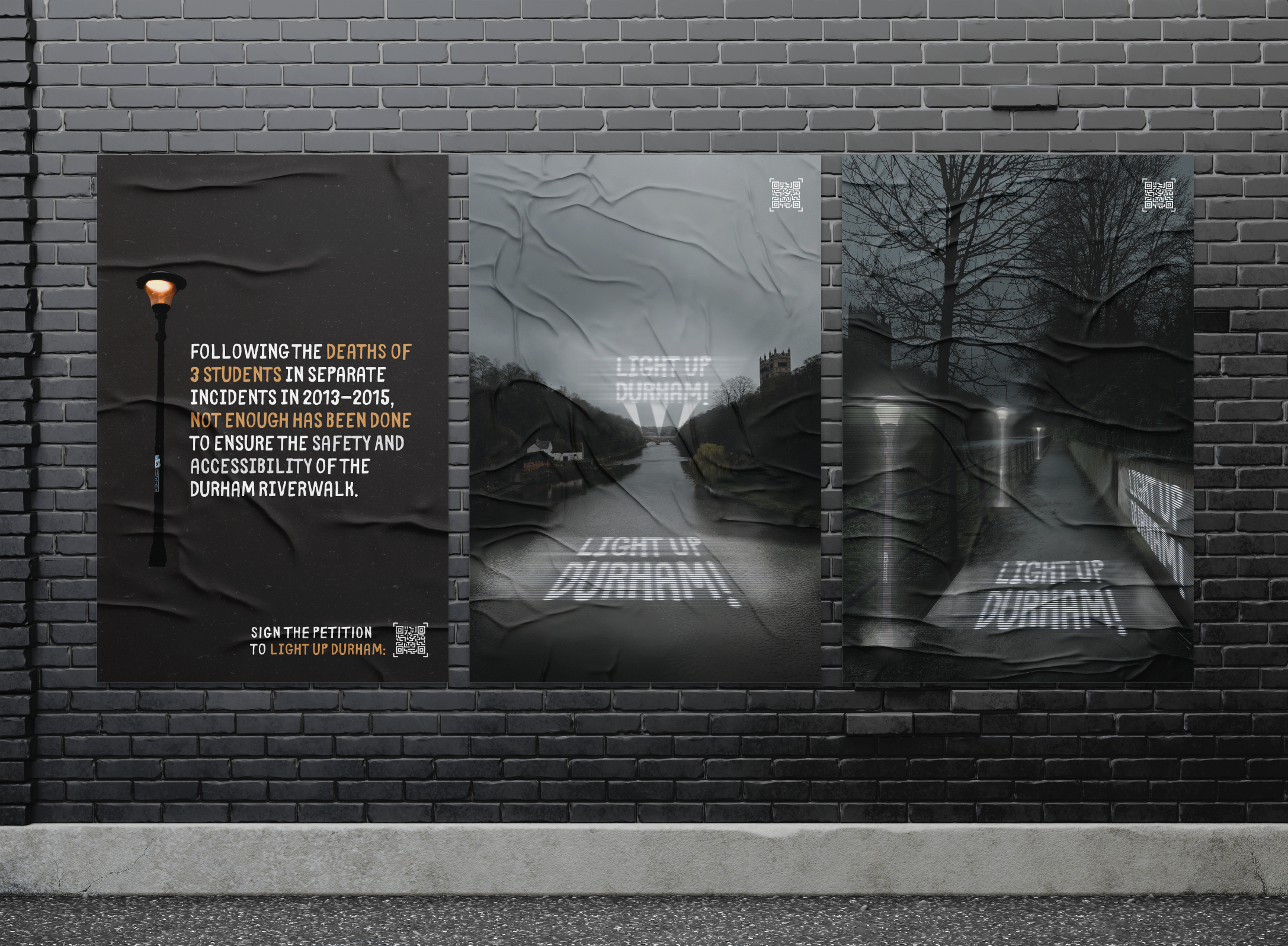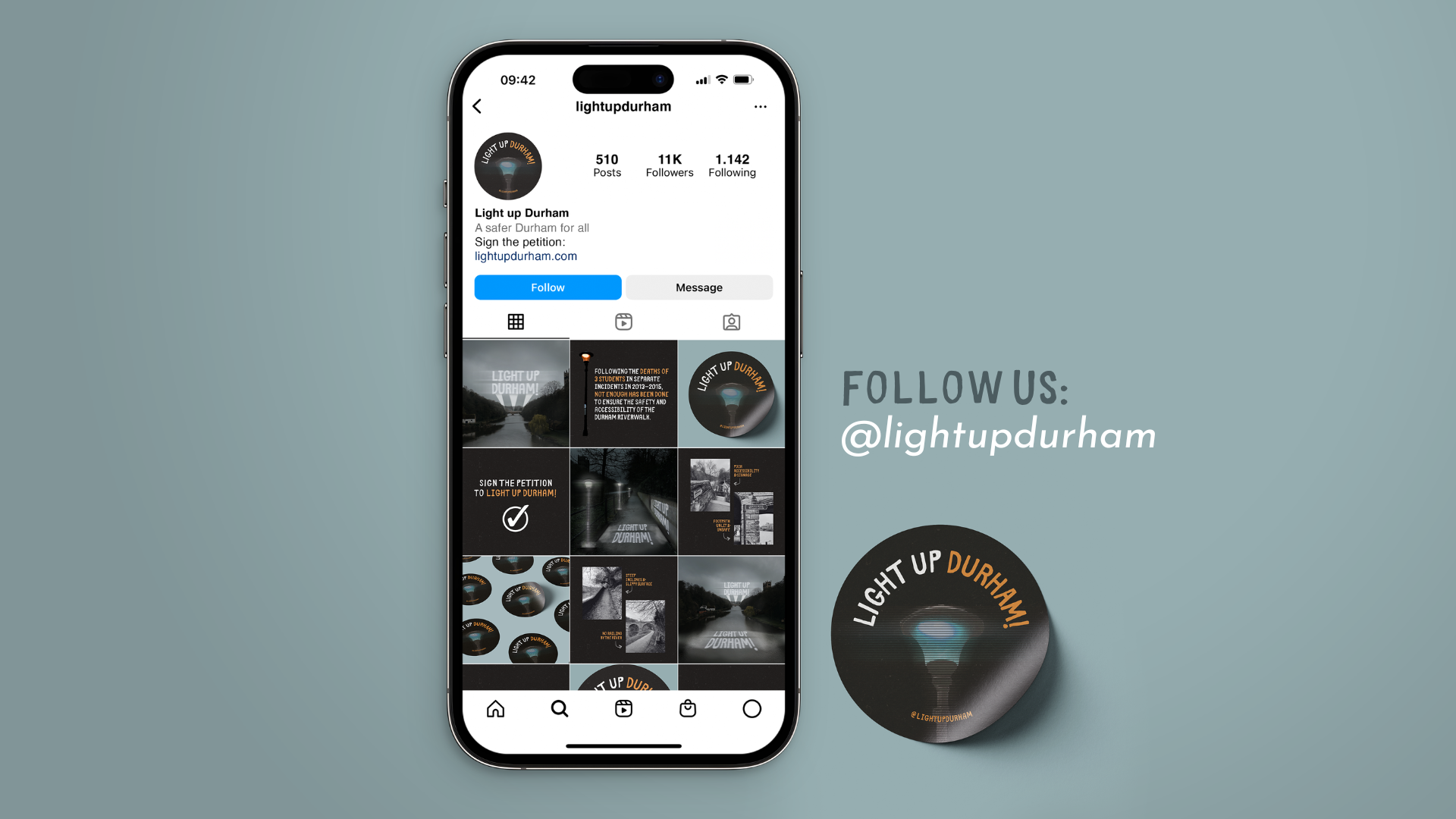
A multi-format campaign imagining a safer, more accessible Durham riverwalk and inviting public action.
Light Up Durham began with a simple, frustrating observation: one of the city’s most-used walking routes feels unsafe after dark - and that risk isn’t shared equally.
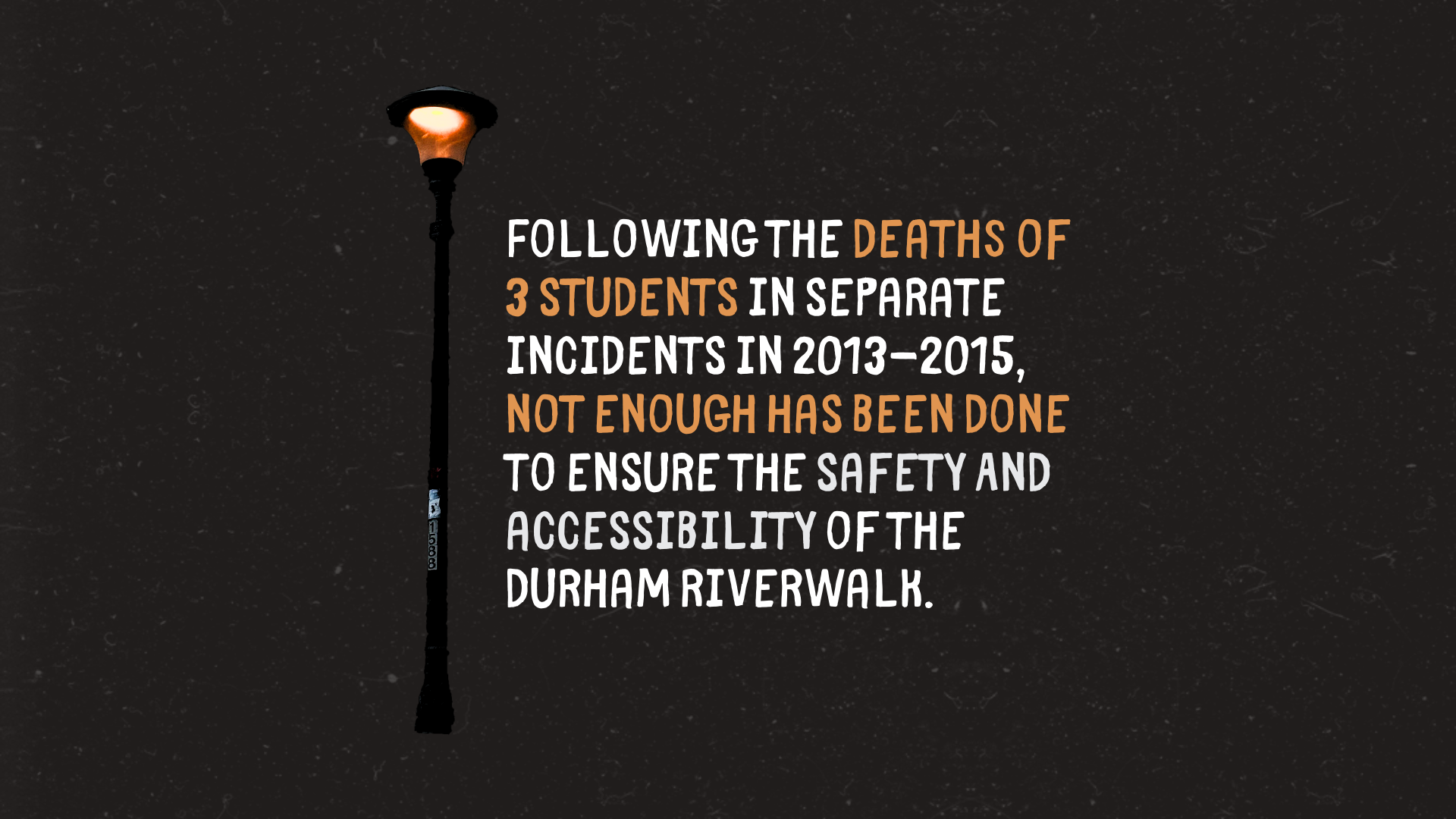
As a Durham resident, I kept hearing the same concerns repeated across local Facebook groups, student circles, and everyday conversations: the riverside paths are poorly lit, confusing to navigate, and often inaccessible - especially for disabled users. Over time, those concerns have been linked to multiple serious incidents, and yet the space still feels like a “known hazard” rather than a welcoming public route.
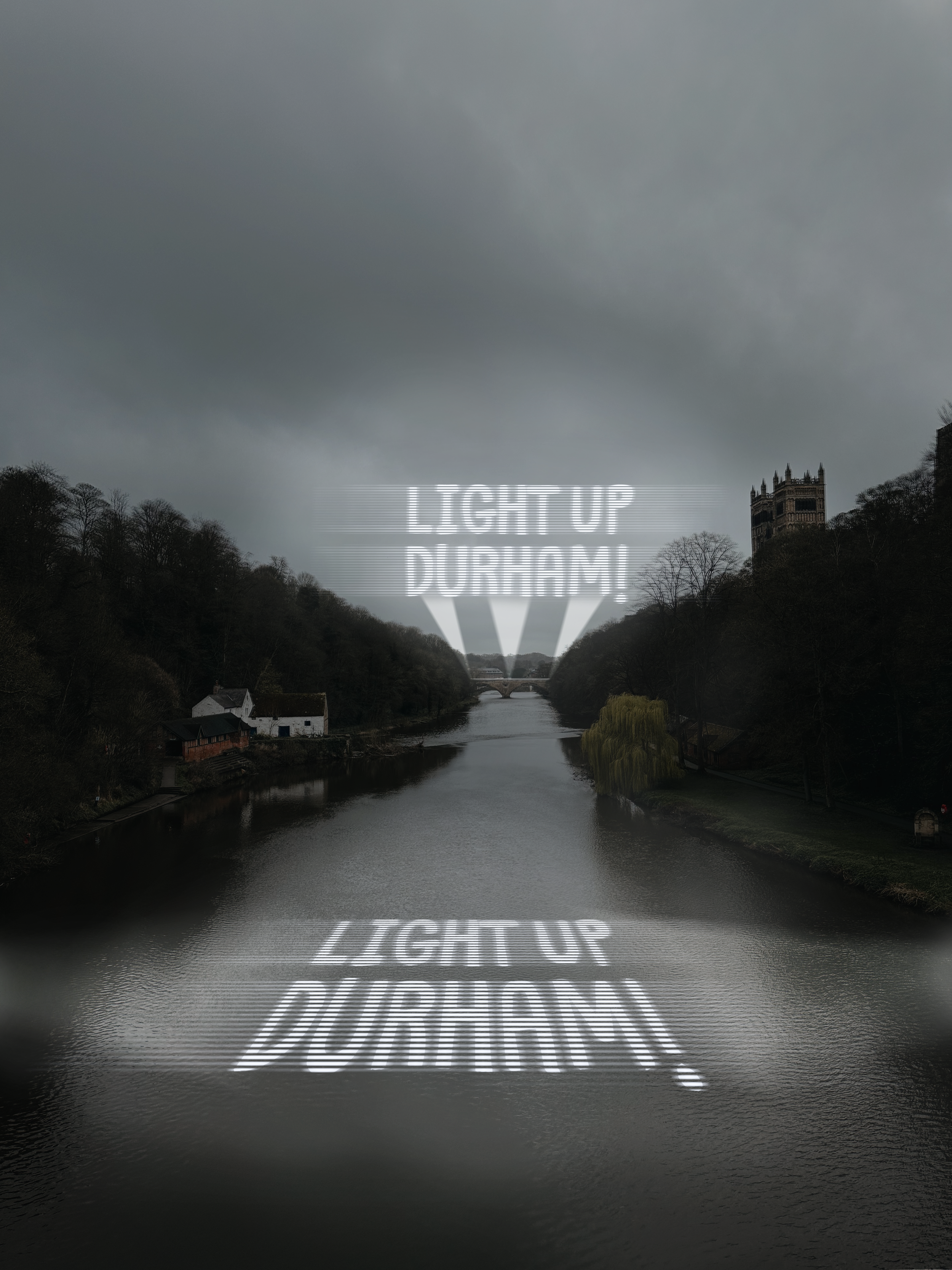
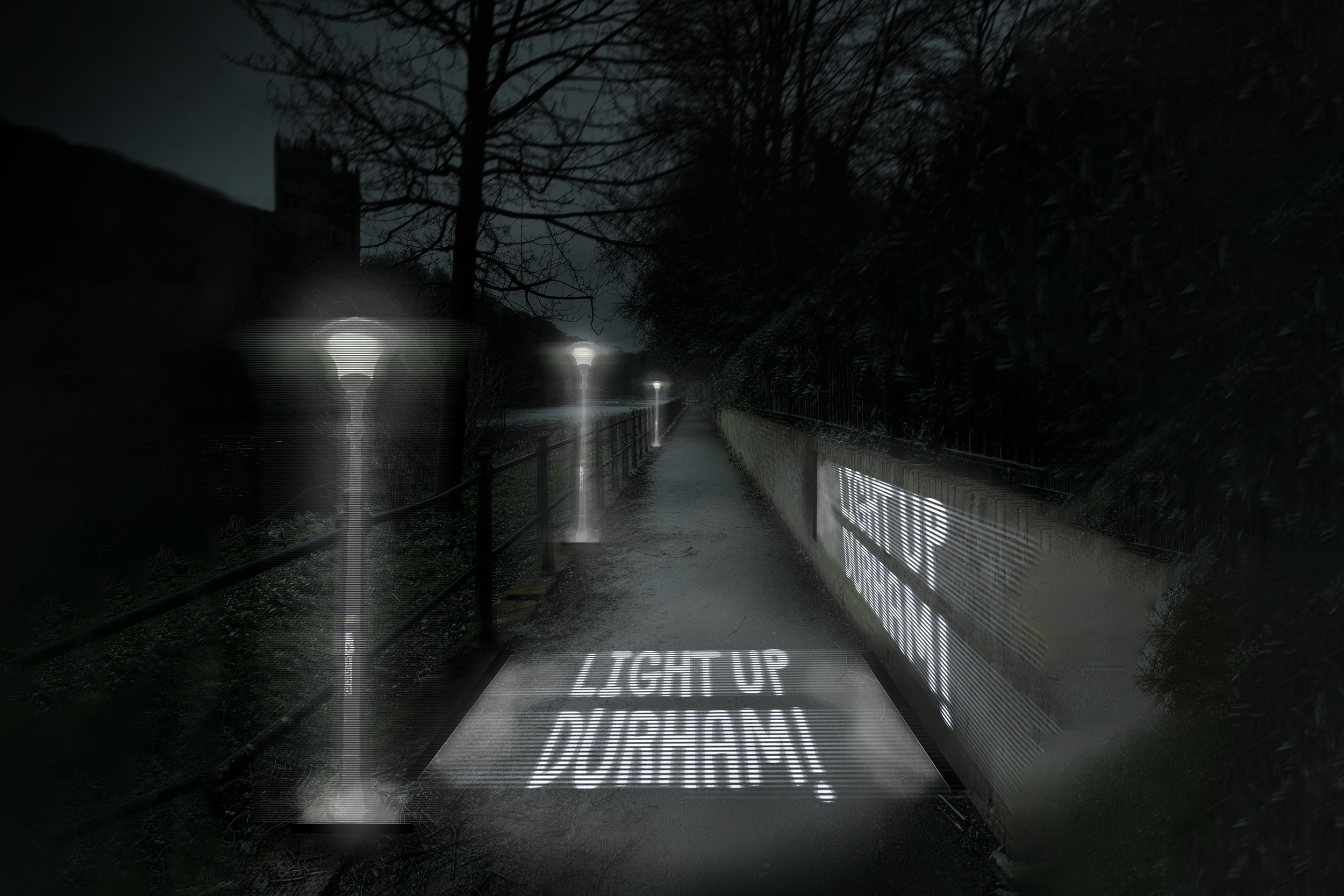
I developed Light Up Durham as a research-led social impact campaign that turns that frustration into a clear public ask: improve lighting and accessibility along the riverwalk. The campaign uses speculative design to help people picture the change, not just read about the problem - imagining the riverside as it could be: safer, clearer, and more inclusive.
The core concept is a projected light intervention (inspired by Durham’s Lumiere light festival) that “lights up” the route with bold messaging and wayfinding-style visuals. QR codes and a direct call-to-action connect that moment of attention to practical action: signing a petition and sharing the campaign.
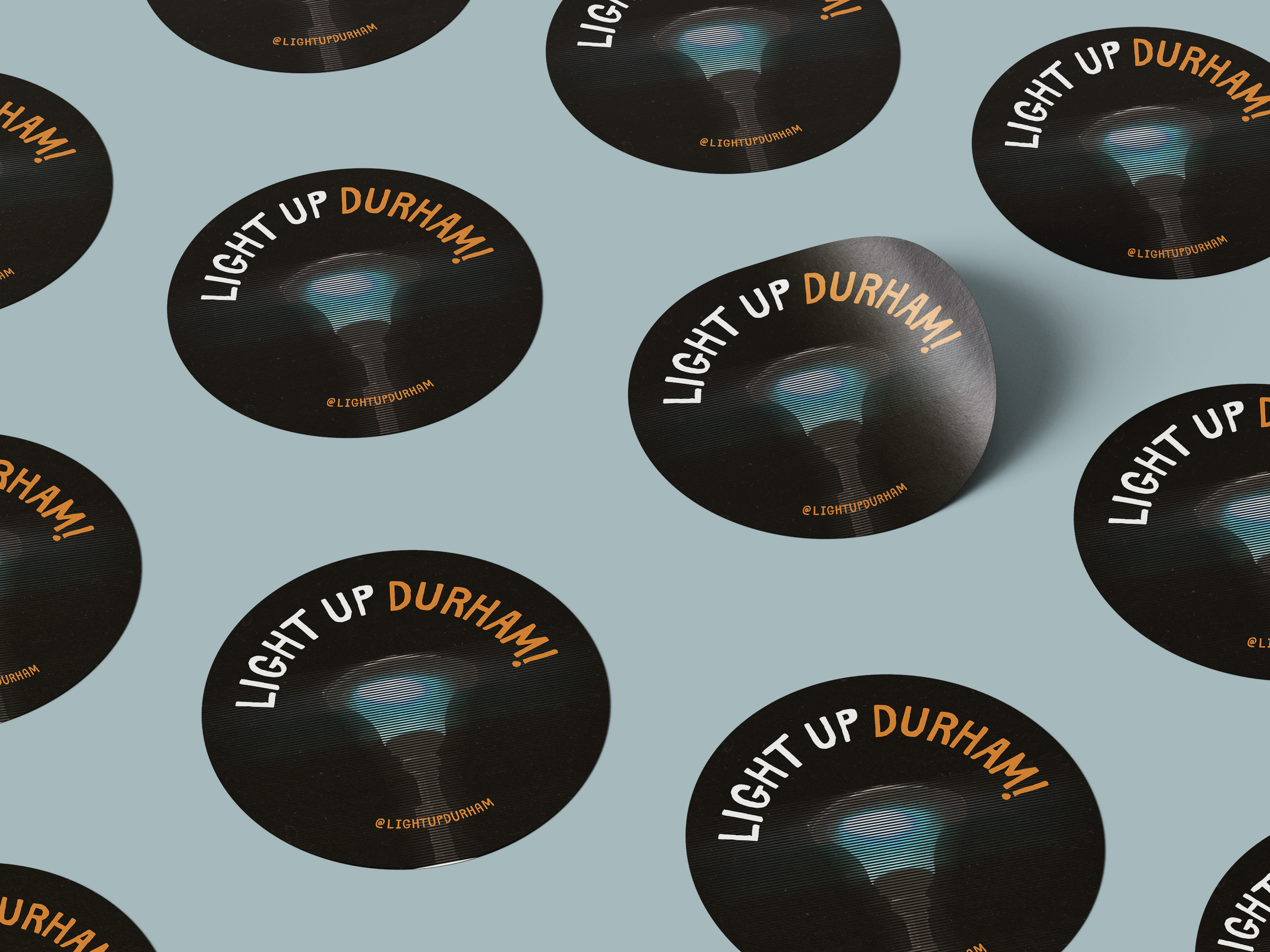
Alongside the installation concept, I designed a full supporting system - posters, social media assets, stickers, and a short case study film - to help the campaign travel across the city and online. This was also my first time using After Effects and motion graphics, pushing me to think about how message, medium, and momentum work together in advocacy design.
Social Impact • Campaign Design • Speculative Design • Public Communication • Motion Design • Community Research